

The new trustee on the Flint trust did a reversal in a hearing last week, signaling that a fraudster will go unpunished with little hope of keeping the Flint trust solvent.
Last month, the trust got good news when Jeff Siegel agreed to be the new trustee.
He was friends with Joyce Flint, the Flint matriarch who set up the trust with her husband Mitchell.
Joyce’s sons, Michael and Guy Flint, are the beneficiaries of the trust, and they approved of the hire.
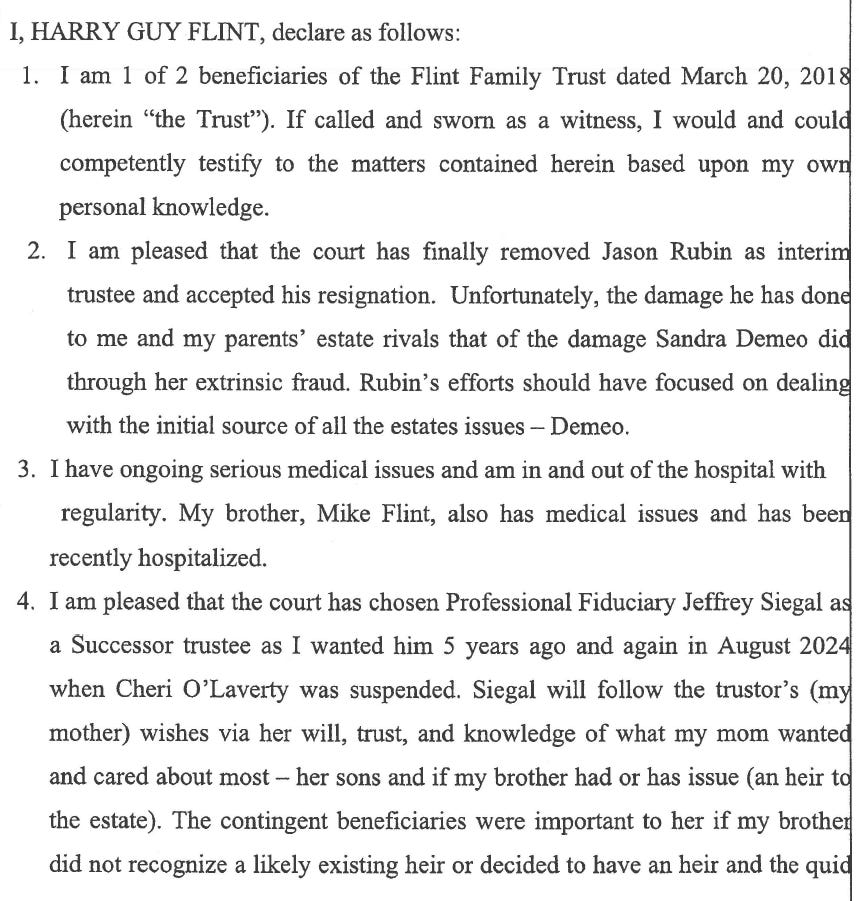
Siegel wrote in a declaration that he was happy to come on board, however, he needed a co-trustee.
The main thorny issue is Sandra DeMeo, a prior trustee whose malfeasance has put the trust on the brink of insolvency.
Siegel, in his declaration, stated that he had a conflict and needed a co-trustee to sue DeMeo.
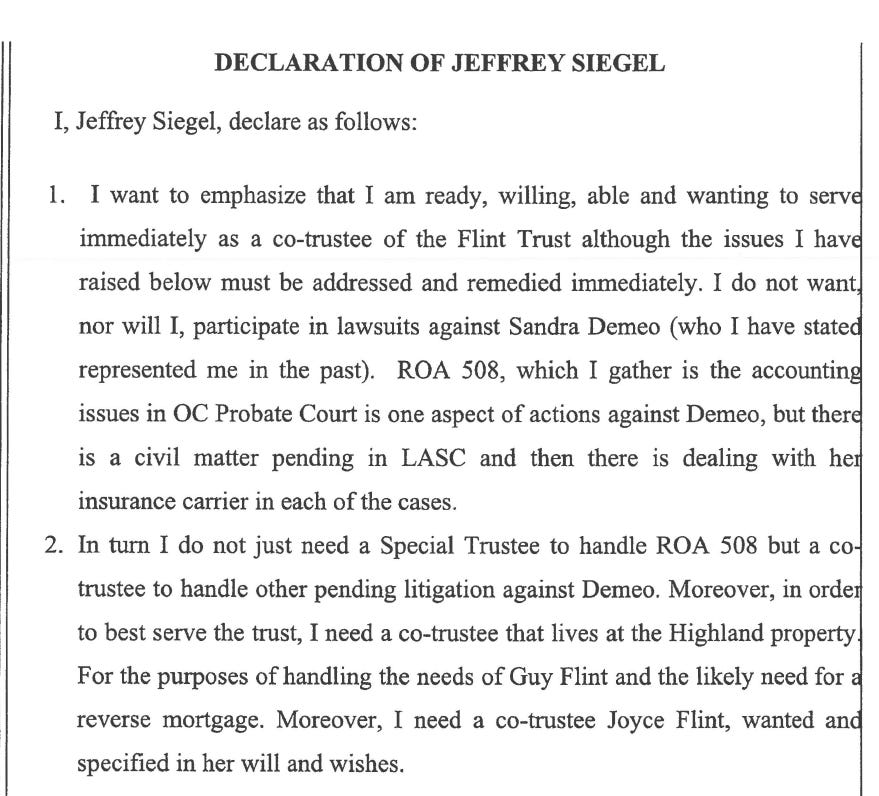
Last week, there was another hearing, and Siegel did an about face.
Julie Holburn has been tracking the case as well, and she observed that hearing.
She told me that Siegel’s attorney told the court that Siegel no longer needed a co-trustee.
She said that the DeMeo issue was not addressed, but she was surprised because she read the same declaration I did.
Siegel did not respond to an email for comment.
The Flint trust has had a tumultuous eight-year run.
It started with three properties worth around $10 million.
Set up by Mitchell and Joyce Flint for their sons, Michael and Guy Flint, the trust should have given the two brothers both spacious homes and plenty of income for life.
Instead, it’s turned into a nightmare, which I’ve documented. See my previous interview with Michael Flint below.
Siegel takes over as trustee from Jason Rubin. Rubin had a controversial run where he pocketed tens of thousands of dollars for himself and his cronies while executing transactions which Mike and Guy Flint vociferously disagreed with. Rubin refused to sue DeMeo while selling a property over the Flint brothers’ objections.
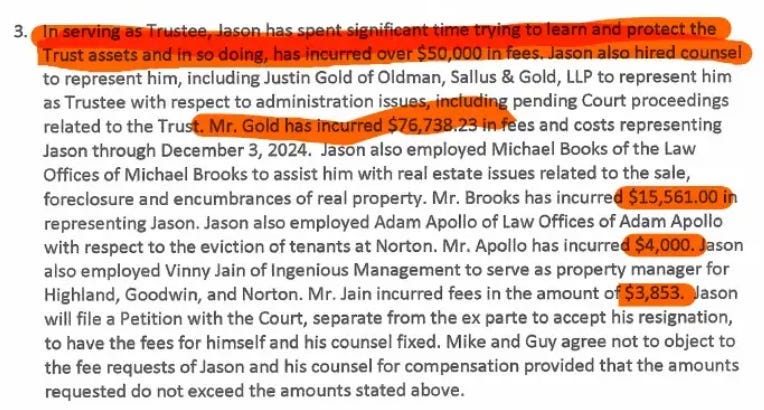
Rubin called the trust insolvent, except when he asked for fees.
His attorney, Justin Gold, was paid handsomely as well. Gold did not respond to an email for comment.
DeMeo executed a settlement agreement without informing the contingent beneficiaries. There are contingent beneficiaries- UCLA, Israel, Cedar Sinai, and others- if neither Flint brother has children.
Then, upon their deaths what remains of the trust will be passed on to them.
That settlement agreement allowed for the trust to be broken up and left it vulnerable.
Pamela Koslyn, who has a financial dispute with Mike Flint, used the opportunity to enter the trust mess.
This caused the trust to bleed cash.
Mike Flint said only two things will keep the trust solvent- suing DeMeo or a reverse mortgage.
Now, it looks like Siegel will pass on suing DeMeo.
The nightmare continues.
Post-script
Check out the fundraiser for Orange County.
Here are the previous articles in the series. Part 1, Part 2, Part 3, Part 4, Part 5, Part 6, Part 7, Part 8. Part 9, Part 10, Part 11, Part 12, Part 13, Part 14, Part 15, Part 16, Part 17, Part 18, Part 19, Part 20, Part 21, Part 22, Part 23, Part 24, Part 25. Part 26, Part 27, Part 28, Part 29, Part 30, Part 31, Part 33, Part 34, Part 35, Part 36, Part 37, Part 38, Part 39, Part 40, Part 41, Part 42, Part 43, Part 44, Part 45, Part 46, Part 47, Part 48, Part 49, Part 50, Part 51, Part 52, Part 53, Part 54, Part 55, Part 56, Part 57, Part 58, Part 59, Part 60, Part 61, Part 62, Part 63, Part 64, Part 65, and Part 66.

This is how trust litigation becomes an extraction industry. A family trust starts with real property, real value, and a real purpose: support the beneficiaries. Then come trustees, lawyers, settlements, fees, disputed transactions, conflicts, and court hearings where the obvious remedy somehow evaporates. If DeMeo’s conduct damaged the Flint trust, sue her. If Siegel has a conflict, appoint a co-trustee who can. What should not happen is the usual probate magic trick: everyone gets paid except the people the trust was created to protect. Rubin called the trust insolvent when it suited him and billable when fees were due. Now Siegel’s reversal raises the same ugly question: is anyone in this courtroom trying to preserve the trust, or is the system simply managing its death?