

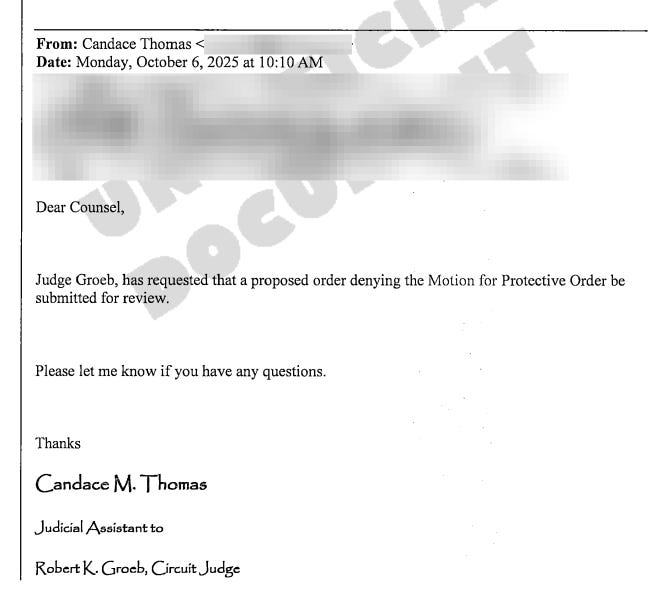
A Florida judicial assistant’s dubious management of the docket, always favoring YouTuber Jeremy Hales, has raised eyebrows.
Candace Thomas is a judicial assistant in Florida’s 8th Circuit, having worked for Judge Robert Groeb.

Judge Robert Groeb became a fixture in Halesverse when the judge in Levy County, Judge Craig DeThomasis, was forced off all Jeremy Hales cases. Judge Robert Groeb was brought in from another county as a replacement.
In September 2025, Thomas ignored Florida law and entered a default against Michelle Preston, the target of most of Hales’ torture, in an invasion of privacy lawsuit.
{Technically, Hales’ confidante Therese and Brett Granger were suing Preston for malicious prosecution after she voluntarily dismissed for invading her privacy after they allegedly showed up on her property uninvited.}
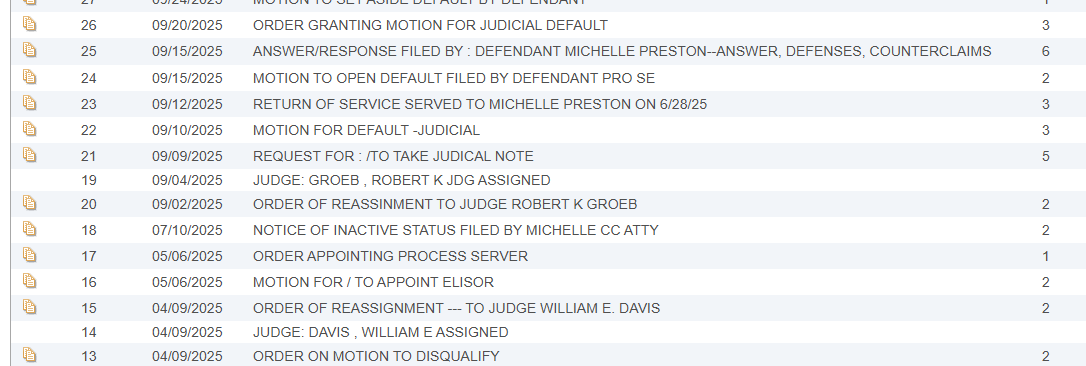
The Granger Docket
The docket in that case shows that on September 10, 2025, Shochet filed a motion for default. Preston filed an answer on September 15, 2025. On September 16, 2025, an order was written for default, despite Preston’s response hitting the docket before the order.
That order was put on the docket on September 20, 2025.
The September 16, 2025, order had a glaring factual error, “The court further finds that despite proper notice; Defendant failed to file or serve proper notice any responsive pleadings or otherwise defend this action.”
In fact, Preston filed her answer a day before that order was entered.
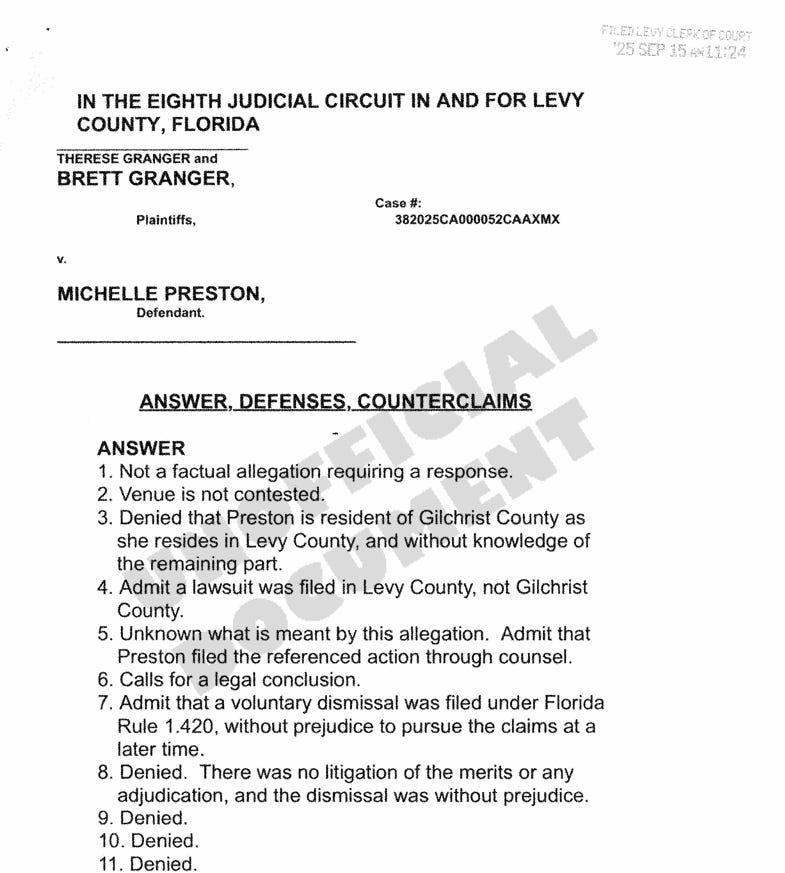
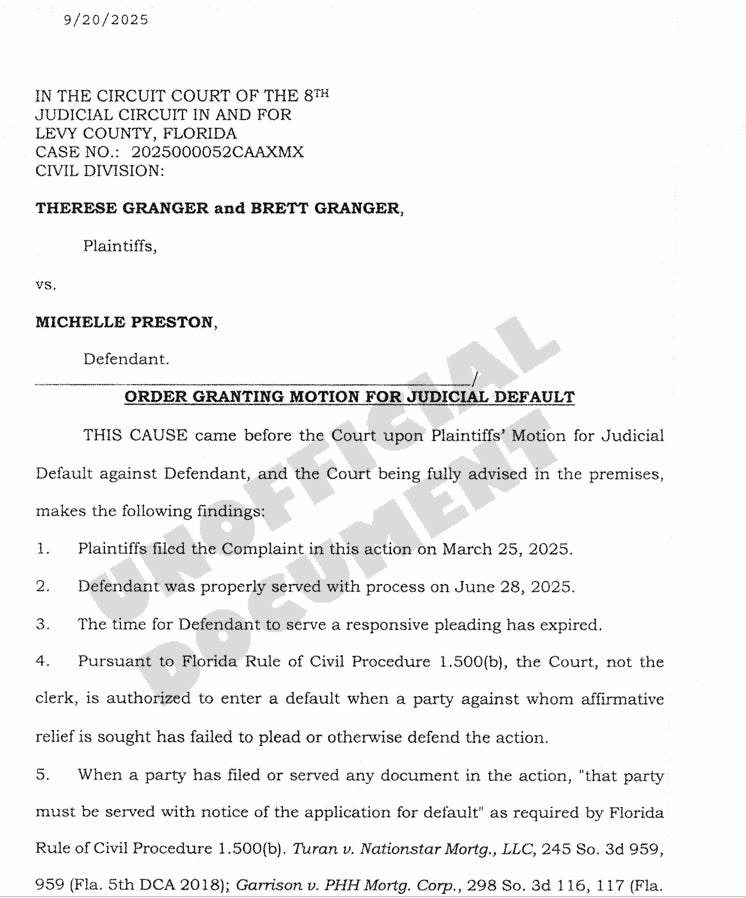
Florida law states, “A party may plead or otherwise defend at any time before default is entered.”
Preston filed a motion to set aside the default on September 24, 2025; that motion remains on the docket not ruled upon.
Thomas and Randall Shochet did not respond to emails for comment.
In October, the roles were reversed. Granger was suing, arguing that Preston’s original lawsuit was frivolous. Preston, in her answer, then refiled the same allegations as counterclaims.
Shochet ignored the counterclaims, and on October 13, 2025, Preston filed a motion for default.
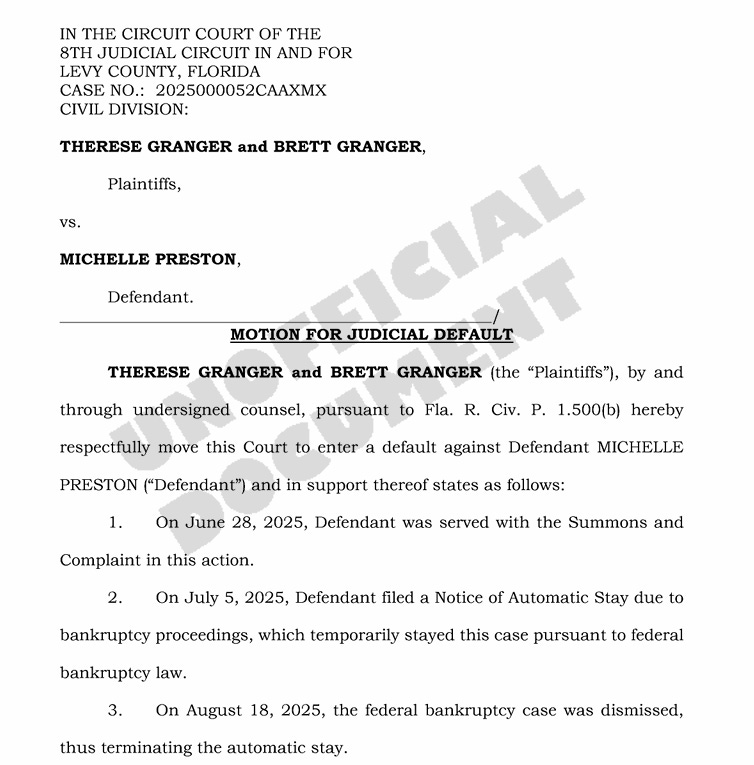
The motion remains on the docket, unanswered but not ruled upon.
The whole affair caught the eye of Bruce Matzkin, who previously represented Preston in another matter.
He sent some ill-advised emails, including one about the erroneous default.
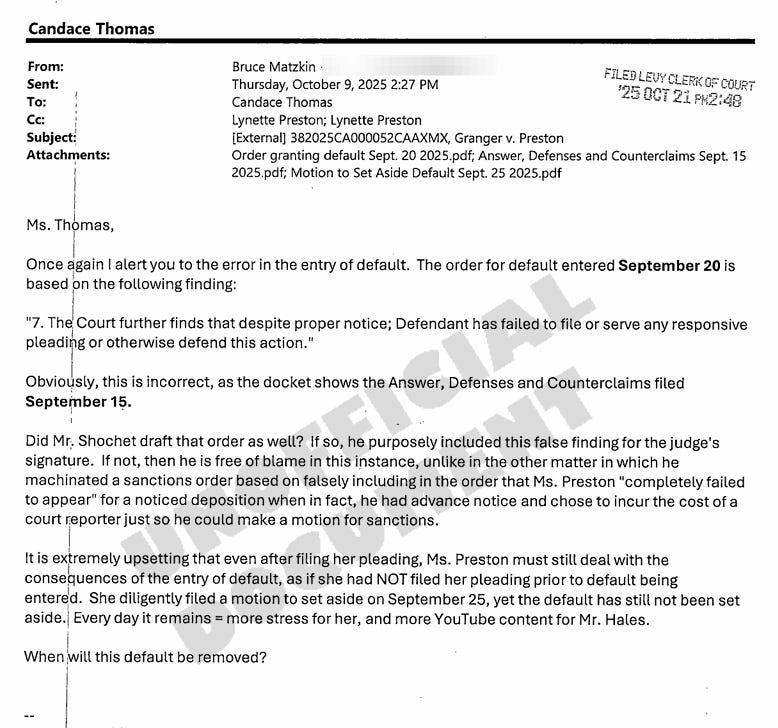
Though Matzkin was not a party to the case, Thomas entered all the emails onto the docket.
That set off another chain of events with Shochet moving the court to issue an order that Matzkin was unlawfully practicing law.
A dubious hearing was held without Matzkin’s presence and with Preston in a bankruptcy. Bankruptcy proceedings create a stay- or pause- in other legal matters.
The Forman docket
As that was going on, Michelle Preston was also involved in a separate lawsuit.
This one involved Larry Forman, a Kentucky lawyer and Hales confidante, Hales, and others.
{Keeping up with all these lawsuits is difficult, and that’s by design. Hales strategy is to create so many lawsuits that the YouTube content never ends.}
Shochet represents all these parties.
On September 21, 2025, Shochet filed to depose Preston.
Michelle Preston depositions have been a YouTube bonanza, so Shochet takes every opportunity to depose her.
Preston responded by filing for a protective order to avoid the deposition. That and the response were not ruled on before the scheduled deposition on, October 1, 2025.
Shochet went ahead with the deposition knowing Preston was a no show.
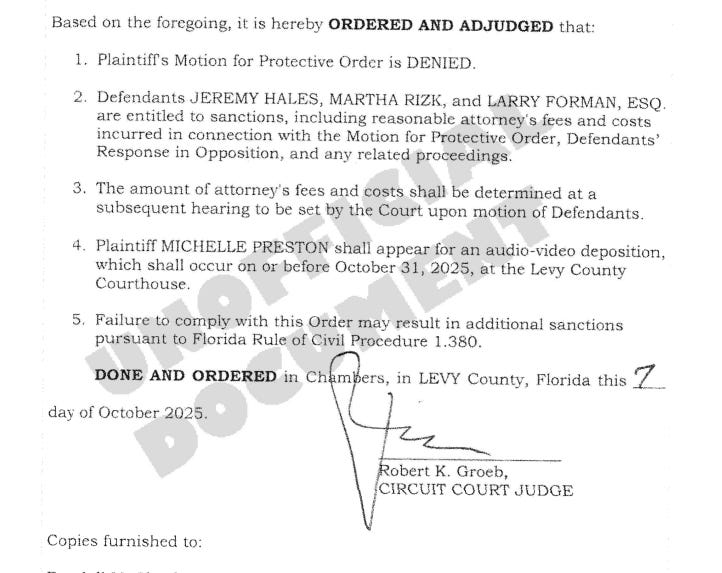
On October 6, 2025, Thomas asked in an email that Shochet to write Judge Groeb’s order, “Judge Groeb has requested a proposed order denying the Motion for Protective Order be submitted for review.”
Shochet emailed back a copy of the draft order later that day.
Groeb and Thomas did not review it carefully, if at all. Shochet not only wrote an order denying the protective order but added sanctions, “Defendants, Jeremy Hales, Martha Rizk, and Larry Forman ESQ, are entitled to sanctions, including reasonable attorney’s fees and costs incurred in connection with the Motion for Protective Order, Defendants’ Response in Opposition, and any related proceedings.”
Conclusion
There’s a dirty secret in the law. Lawyers routinely write judicial orders.
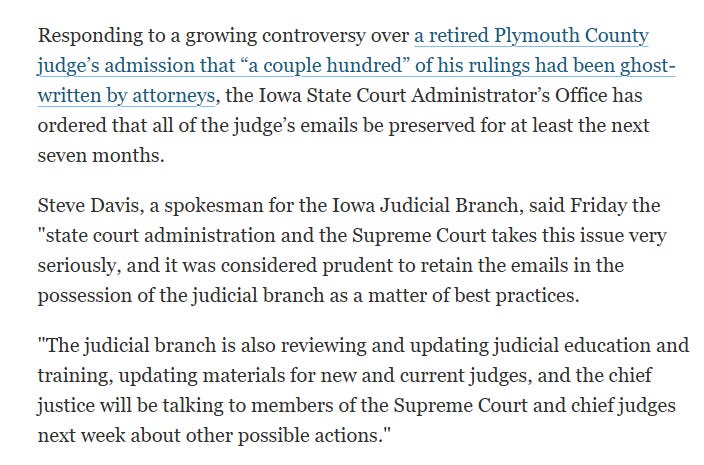
Judges do this because they’re lazy. Unscrupulous lawyers like Randall Shochet take advantage, as in this case.
Post-script
Check out the fundraiser to help me create more articles on the Hales case. Find articles one, two, three, four, five, six, seven, eight, nine, ten, eleven, twelve, thirteen, fourteen, fifteen, sixteen, seventeen, eighteen, nineteen, twenty, twenty-one, twenty-two, twenty-three, twenty-four, twenty-five, twenty-six, twenty-seven, twenty-eight, twenty- nine, and thirty.
Update:
The lawsuit involving the Granger’s was originally mischaracterized. That has been fixed.

The public thinks judges write orders, read records, check dates, and rule after careful review. Cute. In too many courtrooms, the sausage is made by assistants, favored lawyers, templates, shortcuts, and whatever gets shoved under the judge’s nose for signature. Volpe’s reporting on Candace Thomas and Judge Groeb’s docket raises the obvious question: why do the errors and omissions keep helping Hales and Shochet? A default after an answer? A motion to set aside left unresolved? A proposed order that magically grows sanctions language? That is not harmless sloppiness. That is process rot. Courts do not need to be openly corrupt to destroy people. They just need to be lazy, careless, captured, or comfortable letting one side write the script. Due process requires more than a stamp pad and a docket clerk with favorites.
Corruption does work that way. There is a system. I know because I previously used the system.