

Shaken baby syndrome (SBS) can no longer be alleged by prosecutors and social services in New Jersey, and Tennessee attorney Connie Reguli spoke to Richard Luthmann and me about the national ramifications.
In November, New Jersey’s Supreme Court issued a stunning ruling regarding SBS.
In a split ruling that has far-reaching implications for child abuse cases, the New Jersey Supreme Court on Thursday barred prosecutors from blaming shaken baby syndrome for children’s unexplained head trauma in criminal and custody cases.
Justice Fabiana Pierre-Louis, in a lengthy majority decision that five other justices joined, said the syndrome has not been generally accepted in the biomechanical community, making expert testimony about it unreliable and inadmissible in court. While child abuse is unquestionably reprehensible, the courts must ensure proceedings are fair to both defendants and their accusers, she wrote.
“Regardless of the severity or viciousness of a crime … only evidence that is sufficiently reliable and has probative value not outweighed by the evidence’s prejudicial effect may be presented to the jurors to inform their consideration of the charges against the accused,” she wrote. “That requirement extends to expert testimony, which must be properly admitted like all evidence.”
For decades, this dubious theory has been used to convict people of heinous crimes, along with being used to justify taking people’s kids.
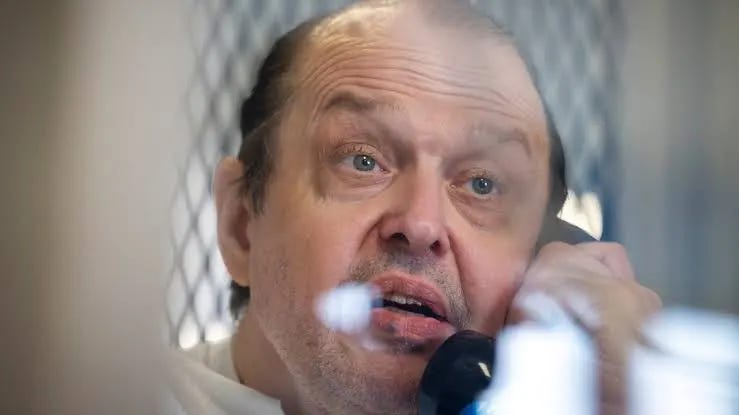
The most controversial case involves Robbie Roberson, a death row inmate in Texas convicted of killing his toddler in 2002 under this dubious theory.
Mr. Roberson, a Special Education student when he dropped out of school after the 9th grade and a person with Autism Spectrum Disorder, is an innocent father who has spent over 20 years on death row in Texas for a crime that never occurred. He was nearly executed on Oct. 17, 2024, but his execution was stayed when a bipartisan group of Texas lawmakers acted to prevent an irreparable injustice. Concerns about Mr. Roberson’s innocence have generated a groundswell of support in Texas, nationally, and internationally.
Mr. Roberson’s case is riddled with unscientific evidence, inaccurate and misleading medical testimony, and prejudicial treatment. In 2002, Mr. Roberson’s two-year old, chronically ill daughter, Nikki, was sick with a high fever and suffered a short fall from bed. Hospital staff did not know Mr. Roberson had autism and judged his response to his daughter’s grave condition as lacking emotion. Mr. Roberson was prosecuted, convicted, and sentenced to death for Nikki’s death.
Connie told us that SBS has been used as justification by child protective services to take children as well.
She said that while this ruling is only case law in New Jersey good lawyers in other states will cite this case, and she expects SBS to be challenged throughout the country.
Connie told us that she has been following SBS for a long time. She said that she only had to defend parents against it once or twice herself, but she watched a legislative hearing on Roberson’s case, the arguments in the New Jersey case, along with reading numerous studies as part of her research.
She said that one issue is that it is difficult to produce a proper study of SBS.
“You can’t shake a baby (to produce results),” she told us. She said that she was familiar with one study that shook monkeys.
Another study used confessions and guilty pleas to abuse involving SBS.
Connie, a former prosecutor, said she was skeptical of those studies, because people often confess and plead guilty when the truth is something else.
She also said another problem with SBS is that while three injuries are associated with it- subdural hemorrhages (bleeding in the brain), retinal hemorrhages (bleeding in the eyes), and fracture to the ribs- doctors often make the diagnosis when only a combination of the three is present.
This is very important, Connie told us, because they are making the leap from the injuries to the diagnosis, so if they are making the determination with a varied set of injuries this makes the diagnosis that much more dubious.
Also, Connie said that SBS is often diagnosed by a dubious subset of doctors- child abuse pediatricians (CAP).
CAPs have become a lightning rod for controversial. It was a child abuse pediatrician who falsely labeled Maya Kowalski’s mom with Munchausen syndrome by proxy.
In a North Carolina case I covered, a CAP falsely accused Jared Bass of child abuse when the injuries were more likely due to brittle bone disease.
NBC won an award for its documentary, Do No Harm, tracking numerous bad diagnoses from CAPs.
With SBS, the testimony of experts of dubious quality is central to proving guilt or substantiating abuse in child protective services cases.
That’s what happened in Roberson’s case. His guilt was determined almost entirely by the testimony of people courts deemed experts to give their opinion, treated as fact by the court.
Now, New Jersey has, “barred prosecutors from blaming shaken baby syndrome for children’s unexplained head trauma in criminal and custody cases.”
One man is waiting to die in Texas for what New Jersey has determined can’t be alleged in their state.


